Saturday, 30 July 2011

True blue


All taken using hand-held Canon Powershot A640

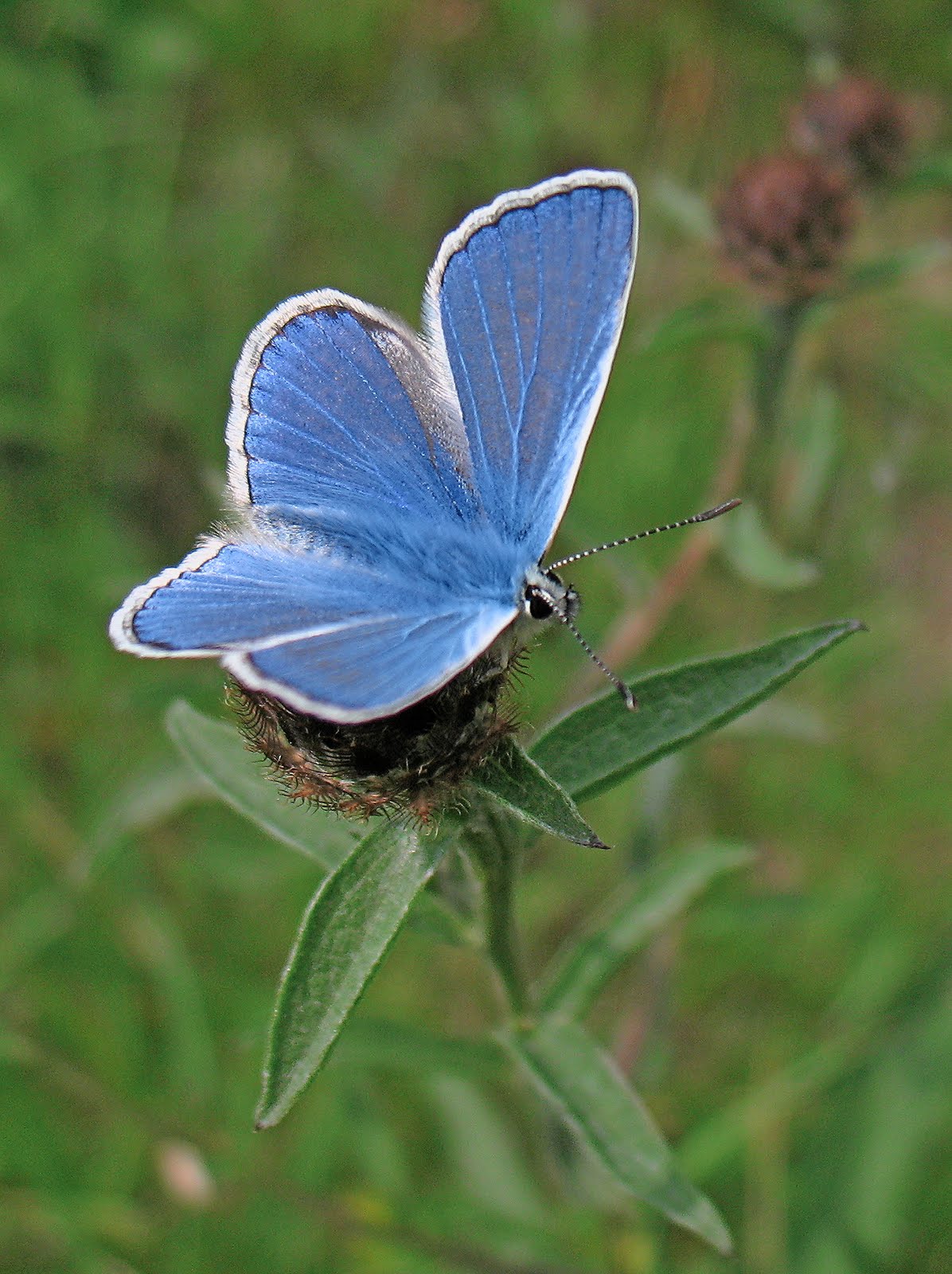
Another `Blue` butterfly, this time the Common Blue (Polyommatus icarus). This butterfly is still a regular sight in our countryside, being our most common and widespread `Blue` species. It is found from sea level to mountains throughout Britain, although is absent in Shetland. Its` success could be due it being found in a variety of habitats, including damp meadows, heaths, woodland, roadside verges, waste ground and even suburban gardens.

It is double-brooded, with the first adults flying in May and June with the second brood flying in August and September, although sometimes this becomes blurred and the butterfly can be found in July (as in this case). The male has violet blue wings, finely edged with clear white wing margins, with the female being brown, but also has the white wing fringes, although in some areas there are blue varieties of the female with the subspecies
mariscolre being particularly beautiful ( this is found in Ireland and north-west Scotland).

Wednesday, 27 July 2011

Blue is the colour


All photo`s were taken using hand-held Canon Powershot A640


The Chalkhill Blue butterfly is one that is characteristic of warm chalk and limestone hillsides, but has declined in numbers over the last century due to its downland habitat being ploughed up to `improve` the land. The species is, however still fairly widespread and stable in the south of England and in some areas the populations can number many hundreds. One such place is Barnack Hills and Holes NNR, close to Peterborough.

The above photo`s were taken at the weekend on a rare period of sunshine. The number of males in flight easily numbered 70+, but there were only a few females apparent. The male is a beautiful silvery-blue (as above), but the females are a brown colour with chequered wing fringes. It is a butterfly of high Summer, flying in a single brood from mid-July to September.

Sunday, 24 July 2011

Curlew


The last of my postings from my recent trip to Rutland Water.

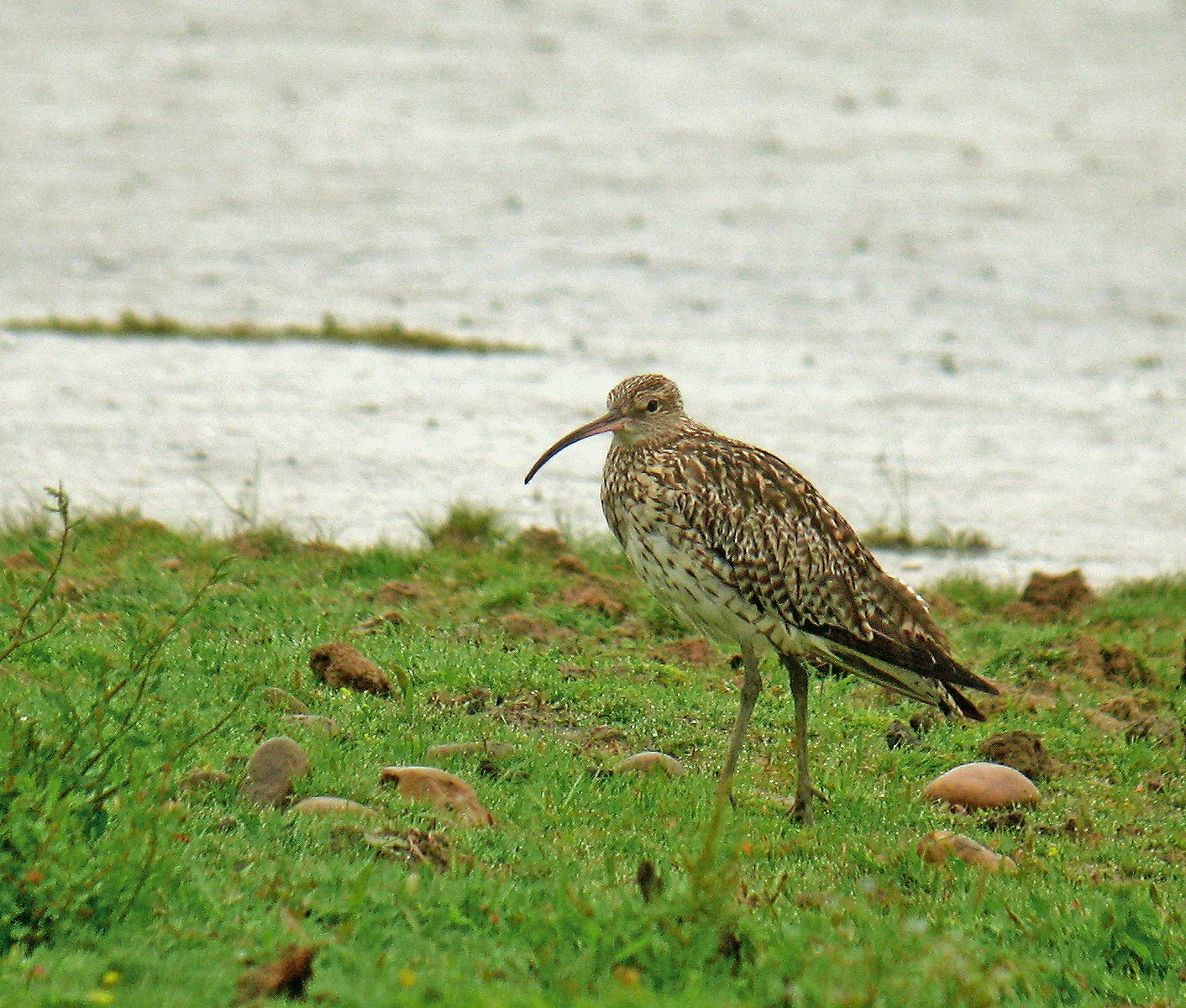
This Curlew flew in whilst I was waiting for the Spotted Sandpiper to show itself. The Curlew is a lovely bird and has beautifully intricate plumage, although some may see it as a `brown` bird!

This is one of Britains largest breeding waders and is primarily identified by its very long, deeply down-curved bill. It is a ground nesting bird, hence the plumage colouration, with up to 38,000 pairs breeding in Britain on the uplands and boggy, grassy heather moorland. The call of this bird is the evocative `cour-eee`, from which it gets its name. These birds are fairly long lived, with the oldest ringed bird being 31 years old.

Saturday, 23 July 2011

Two Bee or not Two Bee


Taken using hand held Canon A640 Powershot

Not two bees as it goes, but four different bumblebees of varying species going about their daily toil of gathering pollen from various flowers. I am no `bee` expert and am not sure of the differing sorts (please let me know any insect experts out there), but am just happy to see that there have been fairly good numbers around this summer.

It is estimated that the services of bees and other pollinators are responsible for one out of every three mouthfuls of food we have, quite worrying when you think that the numbers of these insects are dropping at an alarming rate. Money is a dirty subject, but relevant to so much in our world that I have to bring this up aswell ; the services of these insects has been valued at around £440 million a year. Let us look after our buzzing, bumbling friends, because without them, we may no longer exist!

Wednesday, 20 July 2011

Birds on a wire


The above photo`s were Digiscoped on my recent visit to Rutland Water and is a small sign that the Sand Martin colony there has had a fairly successful breeding season. The birds in the pictures are pretty much all juveniles and could be from different colonies from the surrounding area as these birds tend to gather in these mixed groups before making their long trip to Africa in August.

This bird is one of our earliest migrants, with birds arriving in March. They are smaller than a Swallow and slimmer than a House Martin, with brown upperparts and white underparts with a distinct brown band across the breast (a feature that helps tell it apart from the similar House Martin when the colours cannot be seen well). They breed in colonies and depend on vertical sandy banks for nesting. These sites tend to be close to rivers and sand/gravel quarries. They happily use man-made nest sites in areas where their natural choice is limited and perhaps this has enabled their population to stabilise after a massive crash in 1984. The population in the U.K. is estimated to be in the region of 250,000 pairs, although the bird is found throughout most of Europe, Asia and North America.

Sunday, 17 July 2011

Spotted Sandpiper


Back to birding with a spot of `twitching` yesterday.

This Spotted Sandpiper has been present at Rutland Water for the past few days, but with work commitments I have been unable to visit. Rain scuppered my plans for working yesterday and so with the bird being reported early in the morning I decided to brave the weather and get this `lifer`!

After a rather long walk, in what can only be described as torrential rain, I arrived at the hide that the bird had been seen from. I entered and was kindly put on to the bird by a young lad who was watching it through his scope, I was rather less than enamoured with the view as the bird was at least 500m away! (This bird is the size of a Starling, so is rather small). However, I duly `ticked` and settled in to wait to see if the bird came any closer. The hide gradually filled, the rain got heavier and the bird stayed where it was. Eventually, it flew, but no-one saw where to, so I decided to watch the family of Ospreys that were putting on a little show, obviously annoyed at all these birders paying them no heed. Half an hour went by, the conversation in the hide started to become slightly negative to say the least and I was about to leave, happy in adding 1 more tick in my book, when on a last scan of the area I noticed the Spotted Sandpiper standing approximately 40-50 metres in front of the hide giving fantastic views! After informing everyone I watched and Digiscoped this bird for approximately 20 minutes while it fed quite happily infront of the now happier crowd. It put on a fantastic show, showing its spots off to the full and then flew to the far bank where it remained.

This little wader breeds in North America and is a fairly regular vagrant to Britain with annual records, indeed a pair attempted to breed in Scotland in 1975, but this was unsuccessful. It is related to `our` Common Sandpiper and out of its spotted finery in the winter it is very difficult to tell them apart. Luckily, this bird was all spotty and very obviously a Spotted Sandpiper.