Wednesday, 14 March 2012

A jangle of Corn Buntings


What is the group name for Corn Buntings? There is an `Exultation` of Larks, a `Murder` of Crows, a `Charm` of Finches, but I have no idea what the term is for Buntings! I think it should be a `Jangle` of Buntings because of their song.

A `Jangle` of these lovely birds were seen the other day numbering 110, which, given the state of the birds current situation is quite a feat. I have seen these birds before in an area called Newborough Fen near Peterborough, but never in such large numbers, they must have had a good breeding season last year and thrived due to the mild winter we experienced here.

A `Jangle` of Corn Buntings, do you think it will catch on?

Monday, 12 March 2012

Glossy Ibis


Some rubbish, very distant digiscoped shots of two Glossy Ibis that were found on the Nene Washes, RSPB near Peterborough today. This represents the second sighting of this breed of bird in the Peterborough area for me, the first being a single bird that visited Maxey GP a couple of years ago.

The weather was not conducive to photography today, being extremely foggy, hence the grainy shots. These birds were seen feeding until a jet fighter flew extremely low over the area scaring the birds and causing them to fly to an area out of sight. Later reports showed the birds to still be present, so hopefully they will hang around until the sun makes an appearance!


A very welcome addition to my 2012 PBC list.

Friday, 9 March 2012

Having a Paddy in Sussex


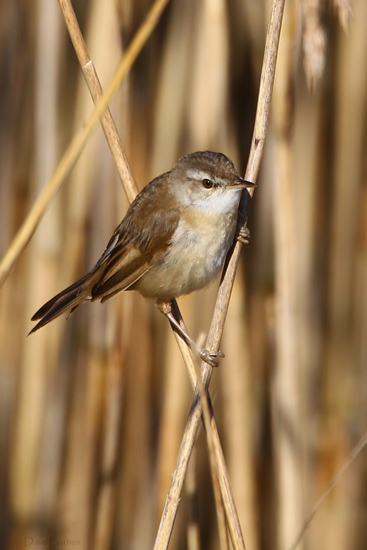
A couple of weeks ago me and Chris Orders decided to venture to the southern climes of West Sussex in search of a rare visitor to Britain that had decided to spend the winter in a place called Pagham Harbour. This bird was the Paddyfield Warbler, a small, short-winged, boldy face patterned relative of the more familiar Reed Warbler. This warbler comes from central Asia and should have been spending the winter months in the Indian subcontinent, but instead ended up in the U.K.

This bird had been present for a number of weeks and so we thought that there would only be a few others there, how wrong we were! As you can see from the above photos (supplied by Chris), there were upwards of 70 people present, all vying for a glimpse of this exotic little beauty.

On arrival at the site we were greeted with the news that the bird had been showing rather well, right up to our arrival, but had now disappeared. We started our vigil. Whilst scanning a distant patch of reed I noticed a small bird `flycatching`, settling on top of some barbed wire and then dropping to the floor where it was out of sight. I was sure that this was the bird. I was proved correct when the bird showed again and I managed to get others onto it as it moved slowly closer, always remaining in the reeds, apart from when it was `flycatching`. The bird showed well for 20-25 minutes, giving good scope views and I even managed to get a few digiscoped images. However, on inspection of these images I discovered that I had some stunning shots of a reed bed and a rather blurry picture of what I think is a brown bird with an obvious eye stripe! Gutted! I did, however remember that I am a birder first and a photographer second (some may say third!). We both managed to see this lifer, the majority present `ticked` this bird for the first time in Britain and we left with another tick in our book.

For a stunning photo of this bird click HERE

Tuesday, 6 March 2012

In the Pink


Returning to Eye Green LNR when the sun was out seemed to be a good idea. The Pink-footed Goose was still present amongst the Greylags and the sun coupled with the proximity of the bird lent itself to getting these `better` shots.

Although I leave the judgement to you, dear reader.

Sunday, 4 March 2012

Just splashing around


A drake Tufted Duck having a splash about in the waters of Eye Green LNR. Of course, he looks like he is having fun, but he was not just enjoying the early Spring sunshine, he was keeping his feathers in tip top shape in time for the important business of the breeding season. Here he is making sure those feathers are just right-


Maybe he was just having fun, who knows!?

Thursday, 1 March 2012

Great Crested Grebe


This bird was almost extinct in the 19th century due to fashion. It was hunted for their feathers, known as `grebe-fur` which was used in the Victorian fashion industry and also, bizarre though it may seem, the whole bird was worn on the hats of the upper classes of society. It is thought that the numbers of this bird plummeted to less than 100 pairs, a mind-boggingly low number considering its fairly common status now. It was the conservation of this bird that started what we now call the Royal Society for the Protection of Birds, or the RSPB for short. A few Victorian ladies were appalled at the senseless killing of these birds and so started the Society for the Protection of Birds and employed some rather ingenious ways of bringing the birds` plight to the fashion concious of the day. They would sit in church and note which lady wore these birds (and other breeds, Little Egrets were also popular) in the hats and then send them letters detailing the barbarous way these birds were butchered just to provide a `pretty` ornament of head gear. The letters hit their mark and thus started the recovery of these beautiful birds.